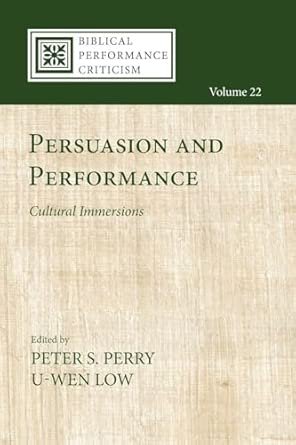
Persuasion and Performance
Cultural Immersions
Edited by Peter S. Perry and U-Wen Low
(Cascade 2026)
Rhetorical criticism and biblical performance criticism are natural partners in understanding communication of biblical texts. This collection of essays brings a diversity of scholars of the Hebrew Bible and New Testament together to orient graduate students and scholars interested in rhetorical and performance criticism to current methods and resources, including those offered by material remains, ritual, rhetorical handbooks, and ancient speeches and dramas. Each contribution immerses the reader into a cultural world rich with persuasion and performance.
“This collection convincingly repositions biblical performance criticism at the intersection of historical criticism, rhetorical criticism, ritual theory, and book history. It will be required reading for advancing biblical studies through any and all of these approaches.” -James W. Watts, Professor, Department of Religion, Syracuse University
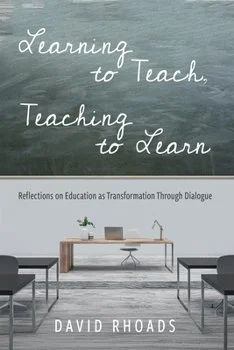
Learning to Teach, Teaching to Learn
Reflections on Education as Transformation Through Dialogue
by David Rhoads
(Cascade, 2026)
A collection of essays reflecting on 32 years of teaching, with many chapters reflecting on the role of performance in classroom experiences and pedagogy. See, for example, this excerpt from chapter 10, "Performing Inside/Outside the Classroom":
I was quite pleased with my plan for the upcoming class. So, when I saw John Windh, the choir director and professor of music, I explained to him how I had been inspired by the choir and his leadership. And I told him about my idea for the January class and what I was planning for the students to do and how it would lead them to be motivated as the choir members had been. His immediate response was clear and direct: “It won’t work!” I was somewhat taken aback. “Why not?” I asked. “Because,” he said, “you need a performance.” Then he explained it to me, “It is primarily because the students know that they will be giving a performance before an audience that instills in them the desire to work hard and to perform well and to take such pride in their work." (p. 111)
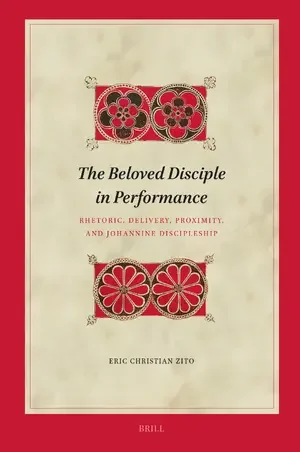
The Beloved Disciple in Performance
Rhetoric, Delivery, Proximity, and Johannine Discipleship
by Eric Zito
(Brill, 2026
This book reconsiders the Fourth Gospel’s portrayal of the Beloved Disciple through the lens of biblical performance criticism. The study demonstrates how a skilled performer—alert to the text’s observable rhetorical cues—brings the central features of the Disciple’s characterization to life in front of an ancient audience. While many interpreters have cast the Beloved Disciple as an “ideal” figure, Zito argues that he is distinguished not by perfection but by his willingness to be near Jesus and move toward him in every circumstance.
Mark Goodacre
April 2026 at Loyola University Chicago
What's the most important recent development in Gospel studies?
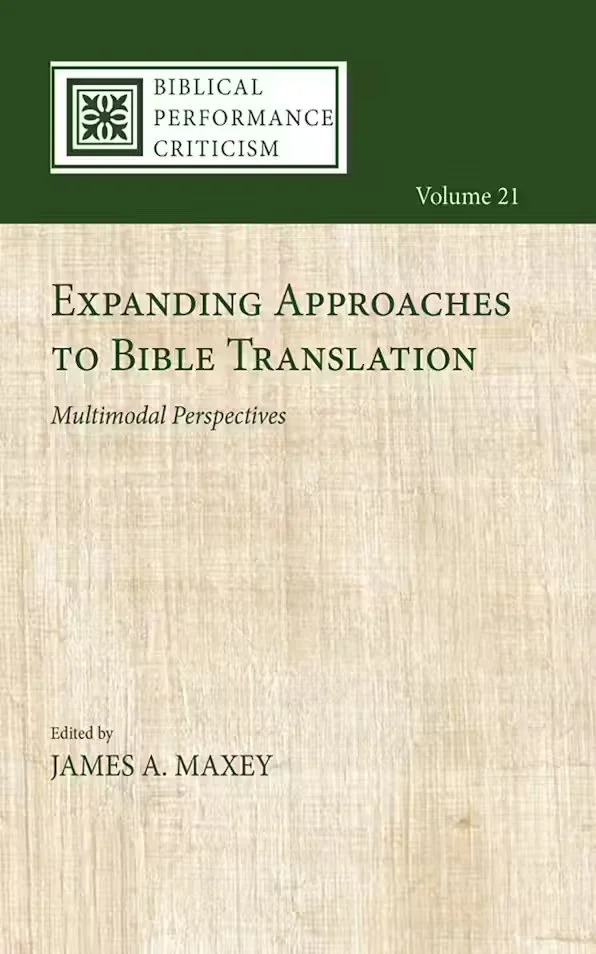
Expanding Approaches to Bible Translation
Multimodal Perspectives
Edited by James A. Maxey
(Cascade, 2025)
The assertion in this book is that translation is as fundamental to biblical material as performance--both in its history as well as in its research approaches. Translation in this sense is more than a transferal of meaning from one linguistic system to another. Bible translation highlights innovative connections and conceptions to biblical texts, in their promulgation, reception, and ever-changing nature. A predominant theory used throughout this book is social semiotic multimodality. This communication theory informs an approach to translation that expands beyond words to other semiotic resources. Sign Language, embodied performance, social media, theater, materiality, and many other types of multimodal communications inform translation. It is important to understand that the Bible is a translated experience. Translation reflects the various ways in which the Bible has been mediated and appropriated throughout history. It follows, therefore, that Bible translation, as a global activity, has been and continues to be influenced by the political and economic flows of history. Race, class, ethnicity, gender, sexual orientation, and other elements of our social locations directly influence the enterprise and results of Bible translation.